



How Interest Rate Rises Can Affect Your Mortgage and Borrowing Power
When the Reserve Bank of Australia (RBA) lifts the official cash rate, it’s known as a rate hike. These increases are usually introduced to slow inflation and stabilise the economy — but they can have a direct impact on anyone with a mortgage or anyone planning to buy property.
So what does a rate rise actually mean for you? Let’s break it down.
1. Mortgage Repayments May Increase
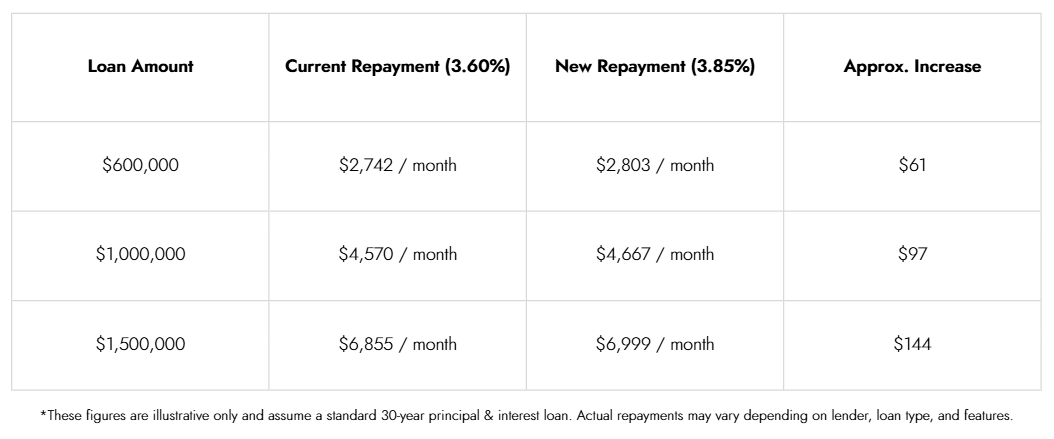
If you’re on a variable interest rate, a rate hike will often lead to higher repayments once lenders apply the increase to your loan. Even a small change in rates can make a noticeable difference over time, especially with larger loan amounts.
If you’re currently on a fixed-rate loan, your repayments won’t change straight away. However, once your fixed term ends, you may transition onto a higher variable rate, which could increase your monthly costs.
Here’s what it looks like:
2. Borrowing Capacity Can Reduce
As interest rates climb, lenders typically become more conservative with how much they’re willing to lend. This means your borrowing power may decrease, even if your income hasn’t changed.
For buyers, this could mean:
-
needing to lower your purchase budget
-
contributing a larger deposit
-
reassessing affordability before making offers
If you already have a pre-approval in place, it’s also worth checking whether a rate rise could affect your approval limit or loan terms.
4. Smart Ways to Prepare for Rate Rises
A rate hike doesn’t mean you’re stuck — there are practical steps you can take to stay in control.
Depending on your situation, you may want to consider:
-
reviewing your current interest rate
-
refinancing to access a more competitive option
-
making better use of an offset account
-
fixing part (or all) of your loan for repayment certainty
-
restructuring debts to improve cash flow
The earlier you explore your options, the more flexibility you’ll have.
Need Support in a Rising Rate Environment?
Whether you’re feeling the pressure of higher repayments or simply want to plan ahead, working with a mortgage broker can help.
At Rise High, we can assist you to:
-
review your current loan
-
compare options across multiple lenders
-
build a strategy aligned with your long-term financial goals
If mortgage stress is starting to build, don’t wait — reach out and chat with our team today.